All images provided by artist unless otherwise indicated
Learn more about Prairie Fibre – Full Circles
Photograph by Saskatchewan Craft Council
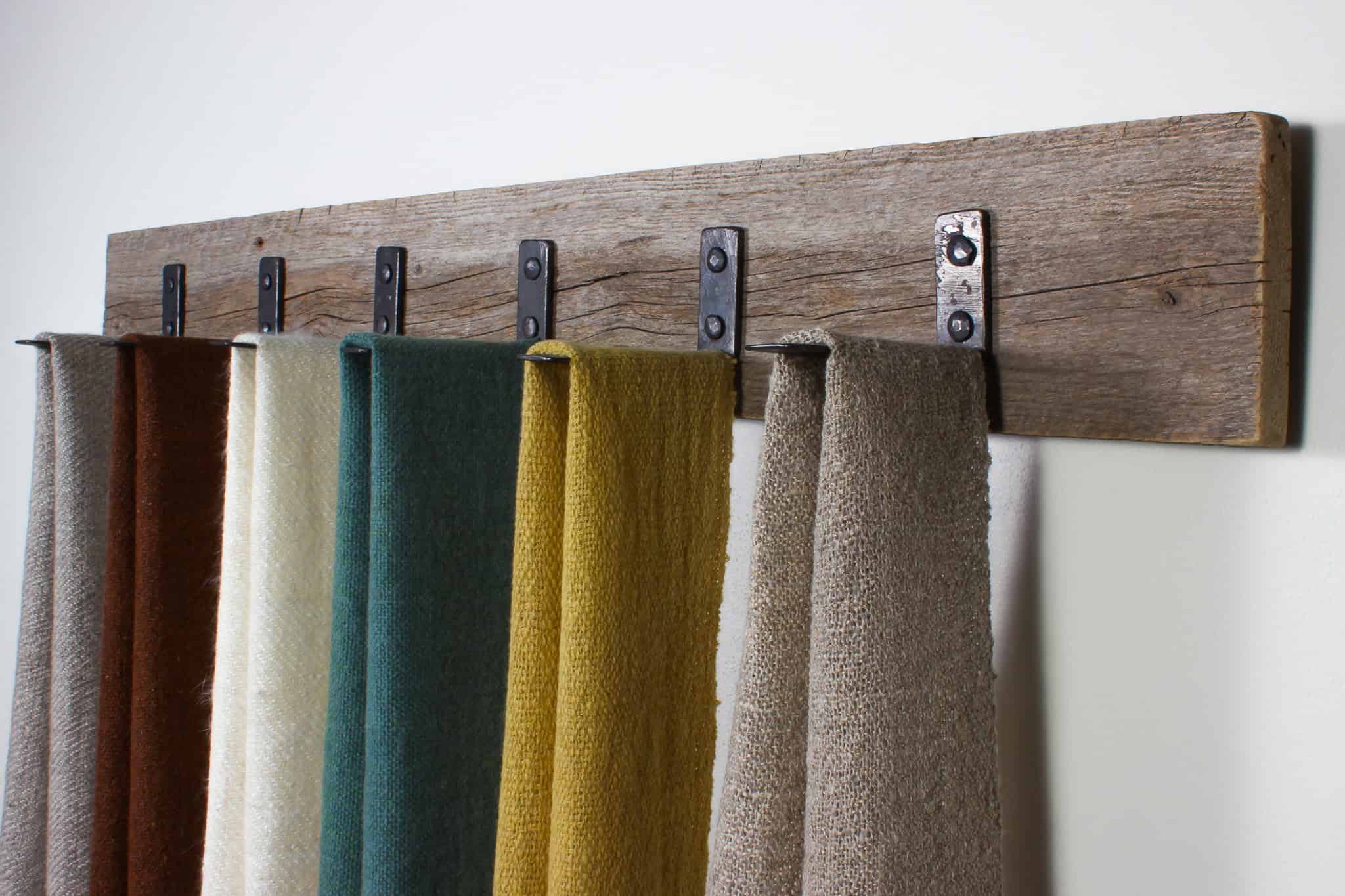
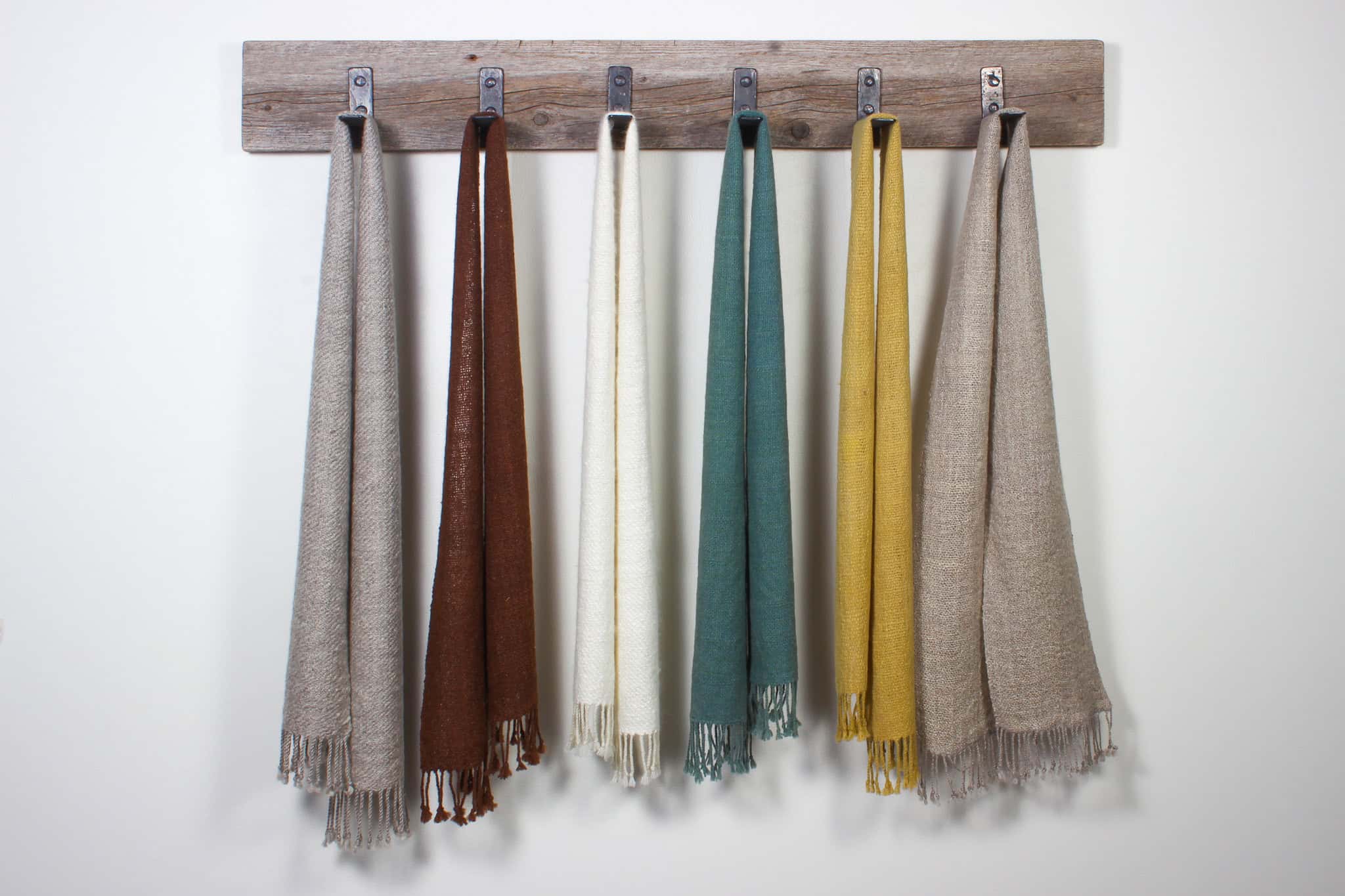
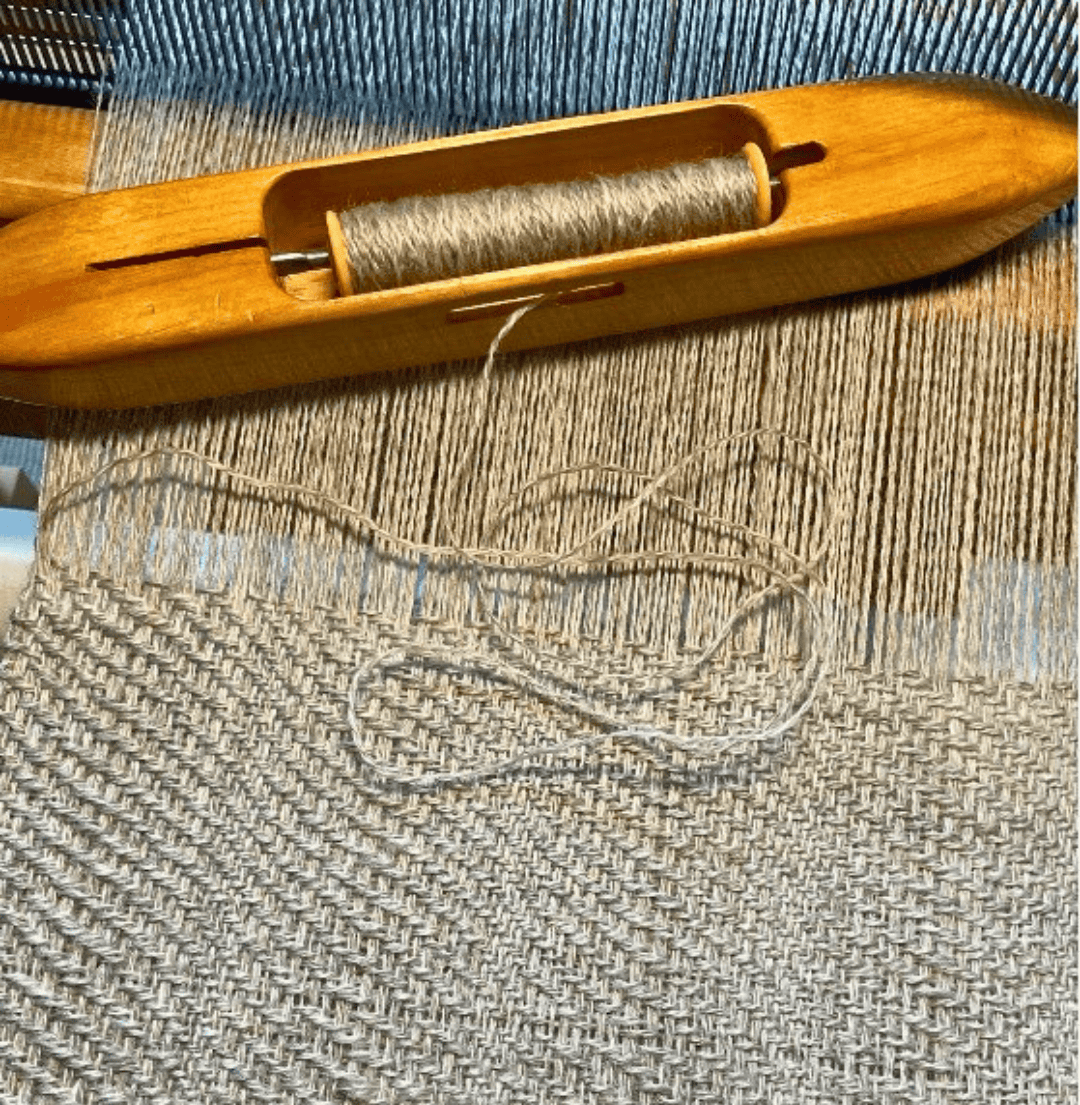
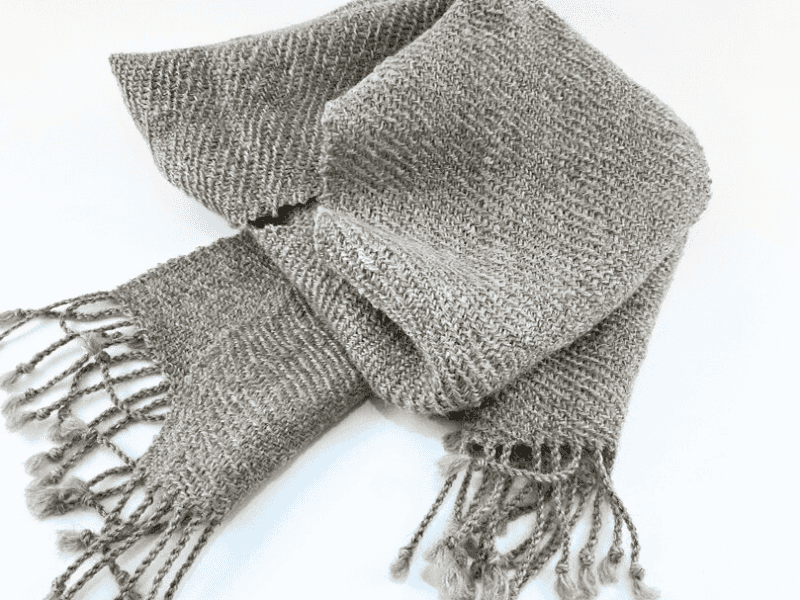
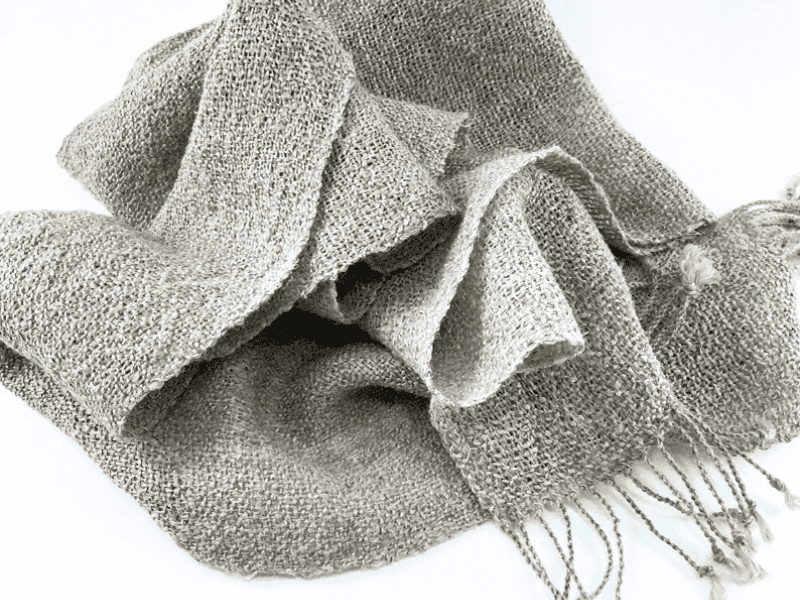
For my weaving, I use fibre which is largely natural and sustainable. I create usable textiles on my floor loom including tea towels, scarves, baby blankets, large throws, rugs, and placemats. The fibres used for this specific project — six scarves entitled Prairie Warmth — is all natural and produced in Saskatchewan. It was sourced from both plants and animals. I grew the flax for the linen scarf myself. I processed linen and alpaca fibres from their raw form myself. Additionally, some of the fibre was spun by specialists other than myself. All six scarves were woven on my large floor loom.
My display fixture was made from a piece of Saskatchewan barnboard with forged hooks, designed by myself and crafted by blacksmith Ramsey Rude of Canwood, SK.
I’m hopeful that people who view my work will have an appreciation of how the wool of a sheep or fibre from a flax plant can be transformed, by hand, into a practical yet aesthetic scarf, appropriate for our prairie winter. My work embraces the concept of slow rather than fast fashion. I’m hoping that it encourages people to think about buying timeless pieces that can be treasured, rather than worn briefly and discarded. I’d also love to see a revival of wool usage in our province. It is an under utilized resource. With our Saskatchewan climate, wool is so perfect. I’m also a great supporter of buying local.
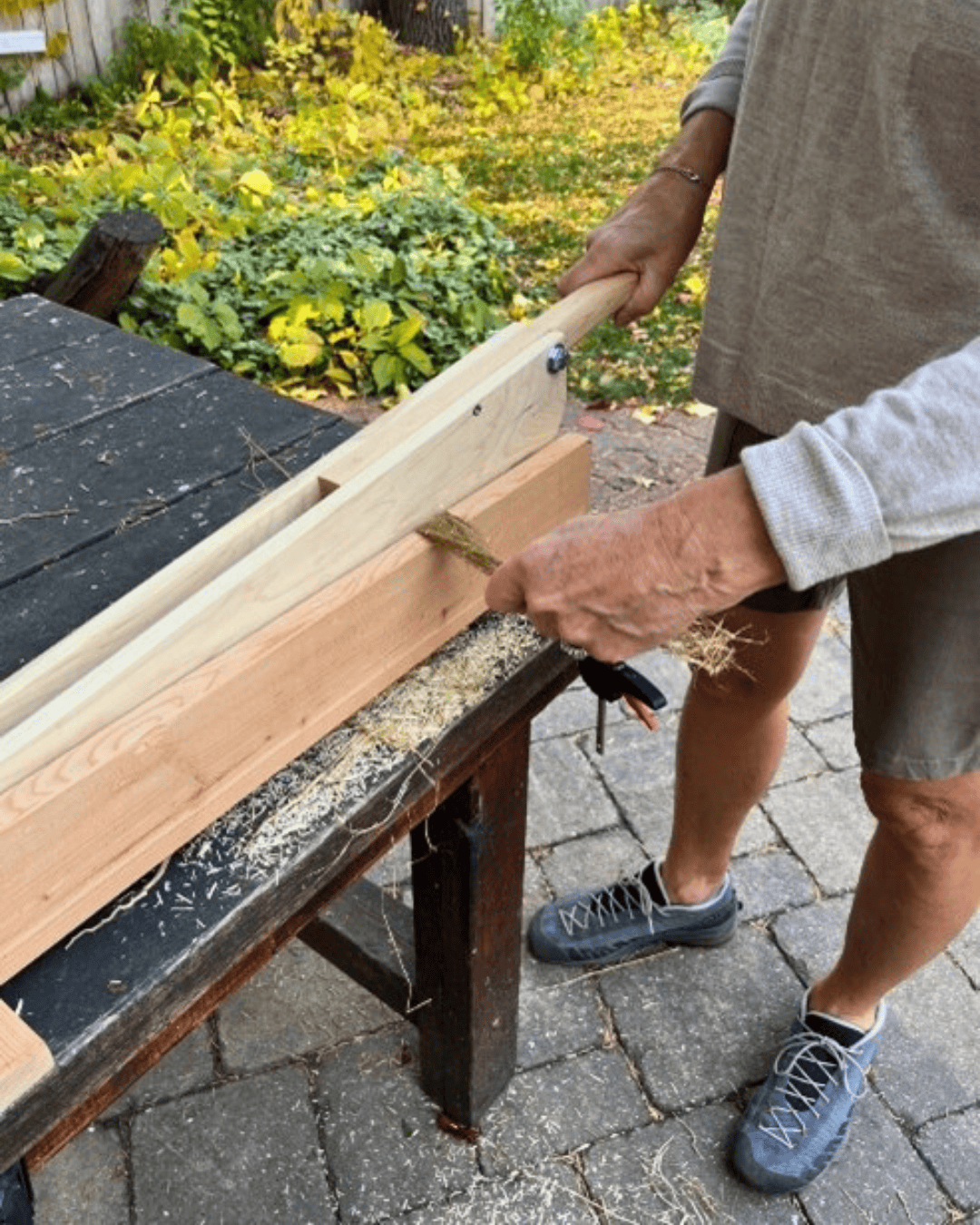
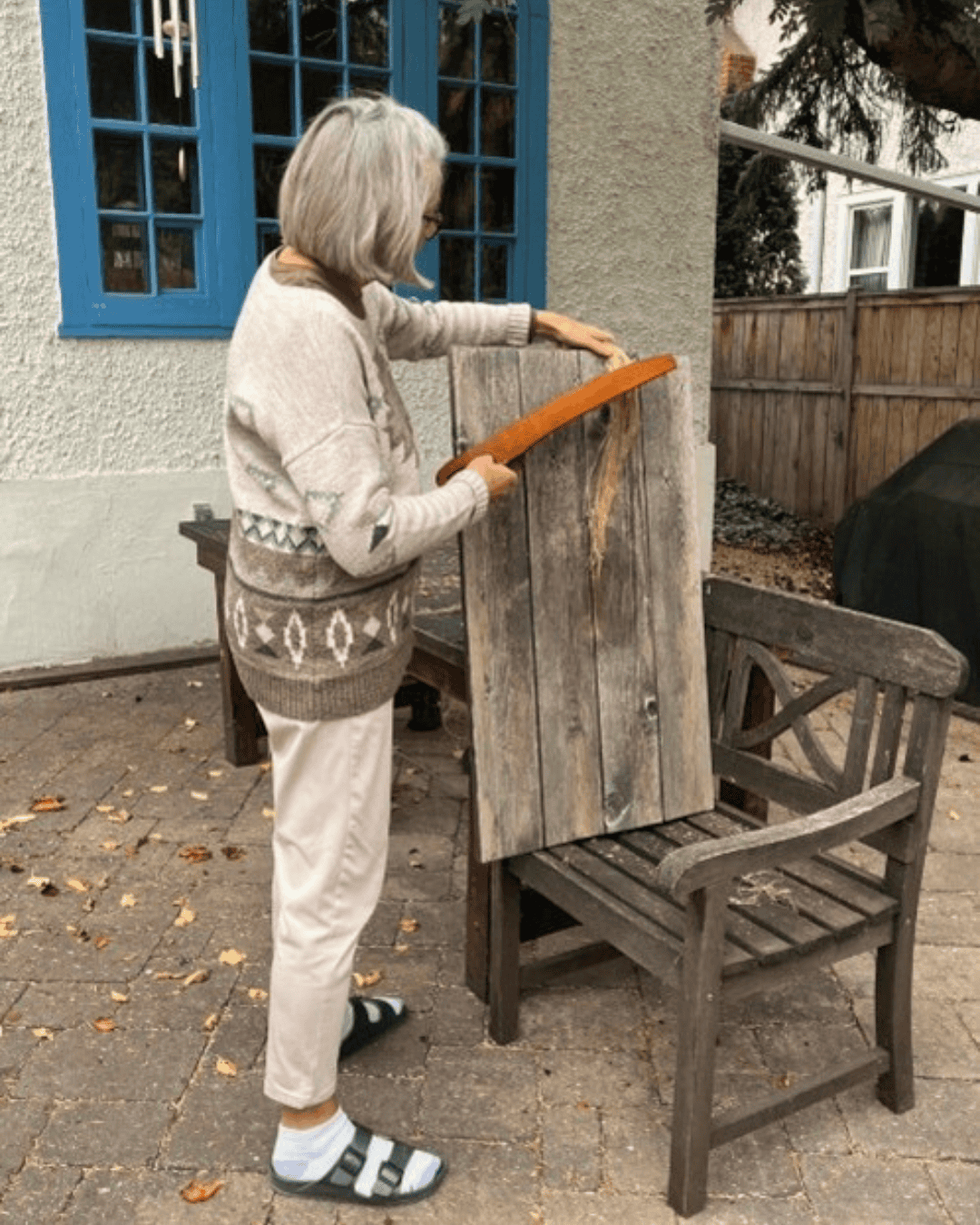
I so enjoyed doing this work. I fully embraced two years of growing small flax crops to garner enough to process into linen to create one scarf. Accruing the hand tools to process the flax into linen was a definite challenge. One tool, an antique scutching knife, was procured from Estonia. Another, a flax break used to break the flax straw, was built by a carpenter friend in exchange for woven goods.
I’ve also been exploring natural dyes. This past summer I planted a botanical dye garden including weld, woad, Japanese indigo, and madder. I also plant flowers for dyeing in my community garden plot. For one of the scarves in this project I used Scabiosa flower petals. In another scarf I used a native Saskatchewan weed, curly dock, which I’d gathered from the city outskirts. Something from nothing. I love that.
I had a lot of assistance from many people for this project. So many people with much knowledge about fibre processing, flax growing, wood working, spinning, dyeing, and more. These are all areas I had little knowledge in, but gained so much. The more I learn about weaving, the more I realize how much I have yet to appreciate.
The (Grey) Cotswold Wool Scarf
This scarf was woven from fibre produced by Sonja Welford’s Cotswold sheep, from Waviebank Woolers in Maymont, SK. The fibre from these specific sheep is a beautiful heathered grey. The fibre was processed at the Canadian Fibre Mill in Caron, SK. This creates a lovely warm and woolly winter scarf.
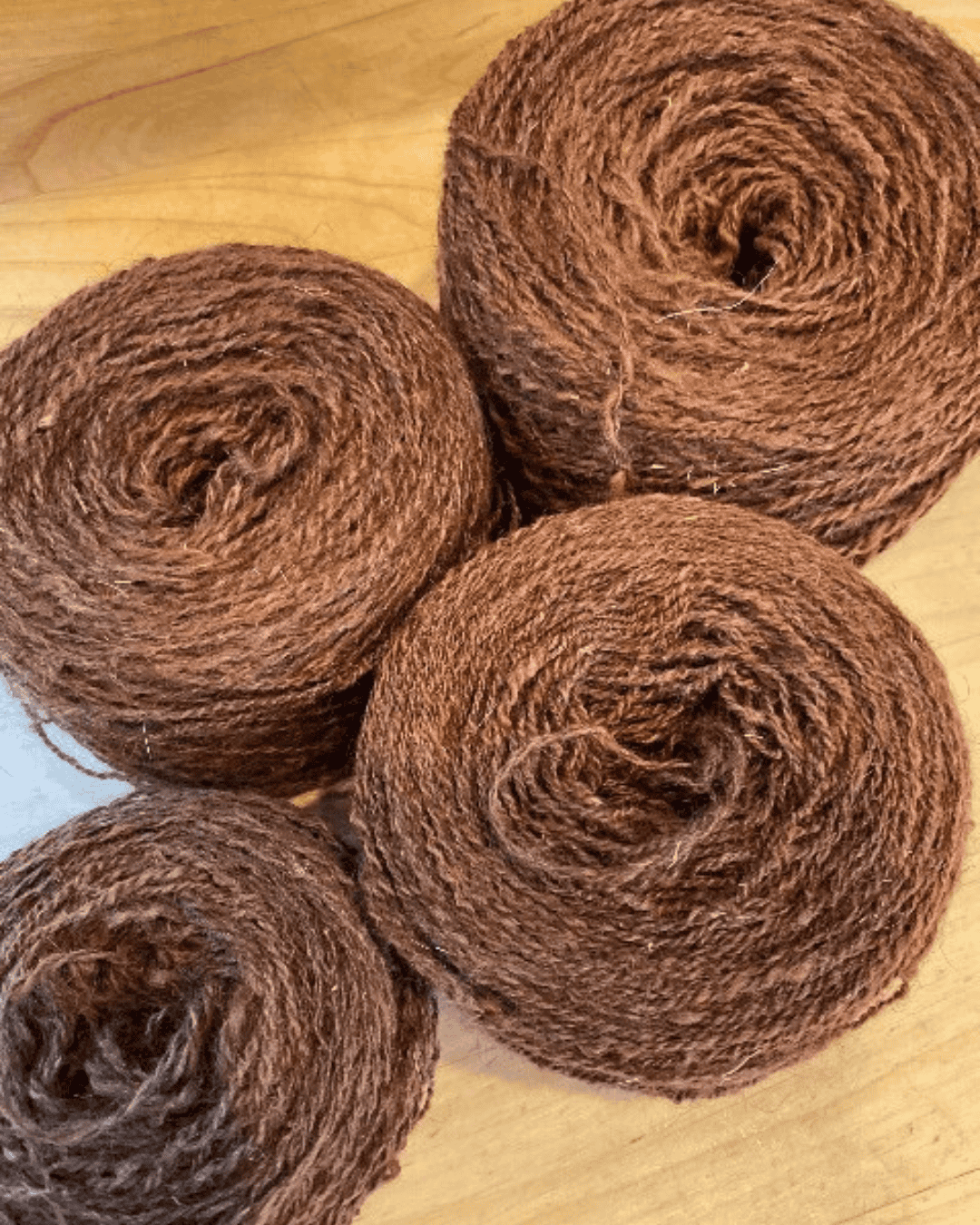
The (Brown) Alpaca Scarf
This fibre was obtained from the animal husbandry department at the University of Saskatchewan in Saskatoon. The alpacas were part of a breeding program and required periodic shearing. The fibre was processed from raw fleece into roving with the generous assistance of Sharon Ottenbreit. It’s a lengthy and somewhat laborious process to pick, wash and card the fleece. The resultant fibre was then spun by the capable hands of master spinner Dora Mushka of Regina. Alpaca is very warm and soft on the skin, well suited for our cold prairie winters.
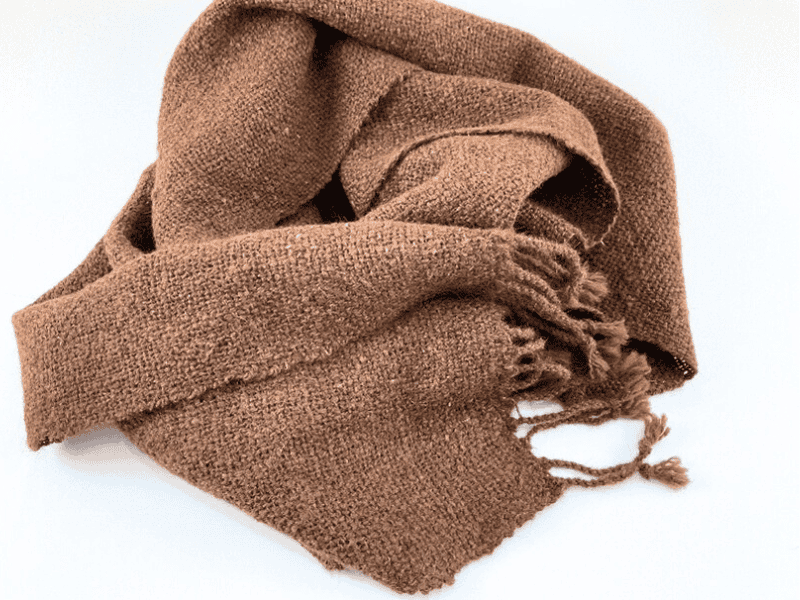
The (Rabbit) Angora Scarf
The fibre for this scarf was from a generous donation of numerous large bags of varied raw fibre to Regina Weavers & Spinners Guild. This specific gift originated from Frances Folkeard. She was known as “the grandmother who thought she was a farmer.” She raised a variety of animals including cattle, horses, llamas, chickens, ducks, and peacocks. This fibre was spun by Peggy Gwillim, from Gwillim’s Farm in Strasbourg. As the angora is a relatively short staple, Peggy spun it with longer stapled merino fibre from her own flock. The warp (lengthwise fibre ends) was comprised of Corriedale from Arlette Seib’s Dog Tale Ranch sheep, near Watrous. The angora provided the weft, which is laid down in crosswise fashion, with the use of a shuttle. The resultant scarf is luxuriously soft and cozy.
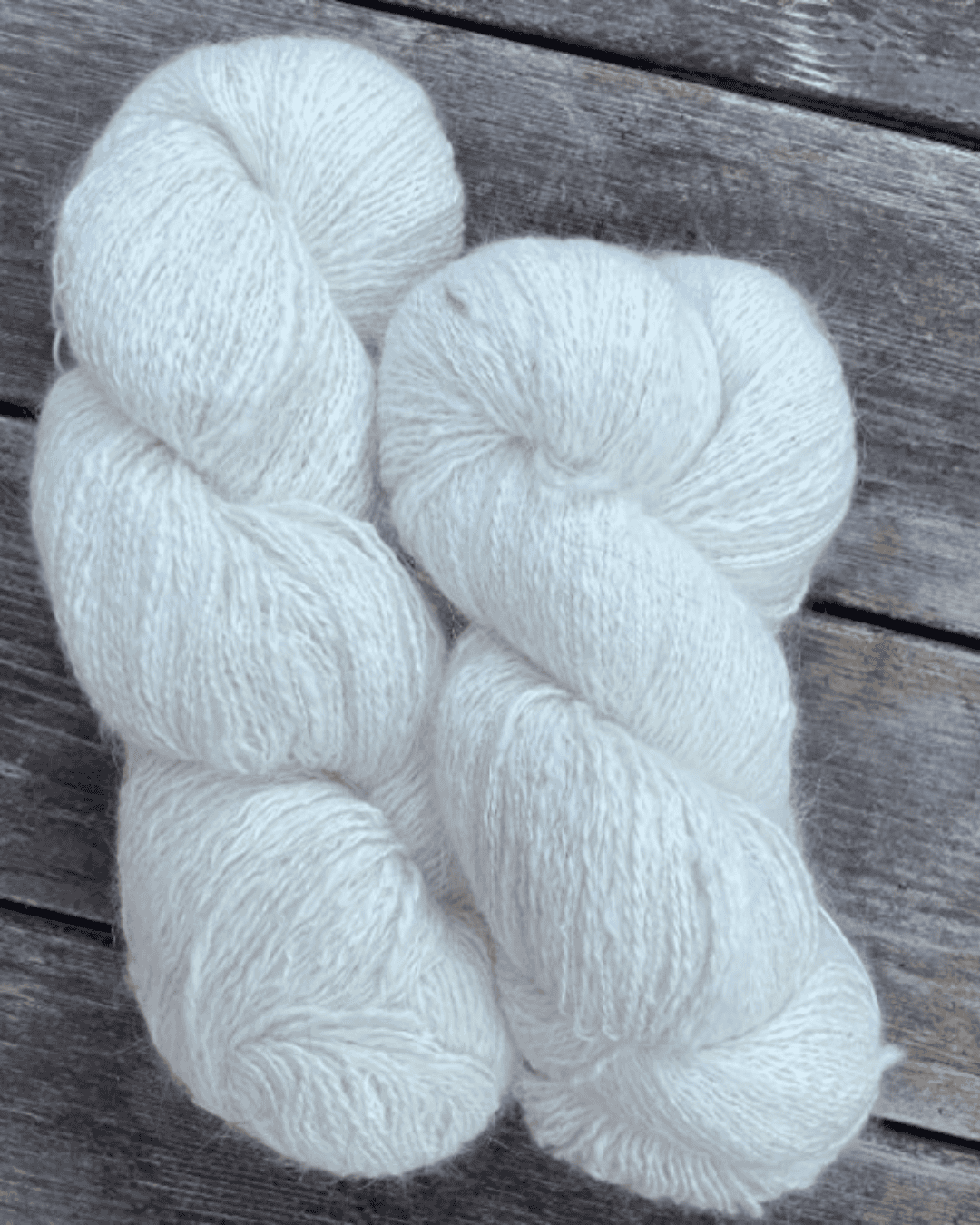
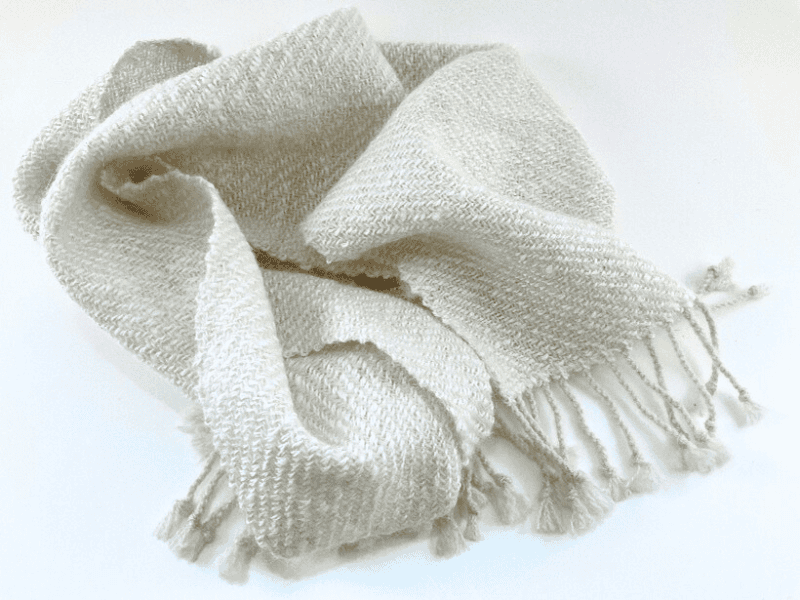
The (Blue) Clun Forest Wool Scarf
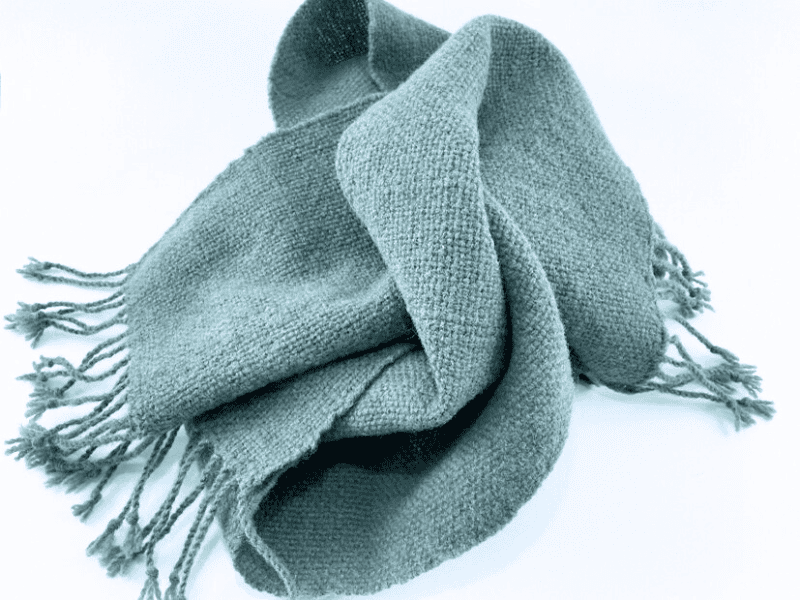
Brooke Aitken’s flock from Loch Lomond Livestock, near Eyebrow, provided the warm and soft woolly fibre for this scarf. The raw fleeces were processed at the Canadian Fibre Mill in Caron. I used Black Knight Scabiosa flower petals to dye the fibre prior to weaving to obtain a beautiful shade of blue, much like one of our vast prairie skies.
The (Tan) Corriedale Wool Scarf
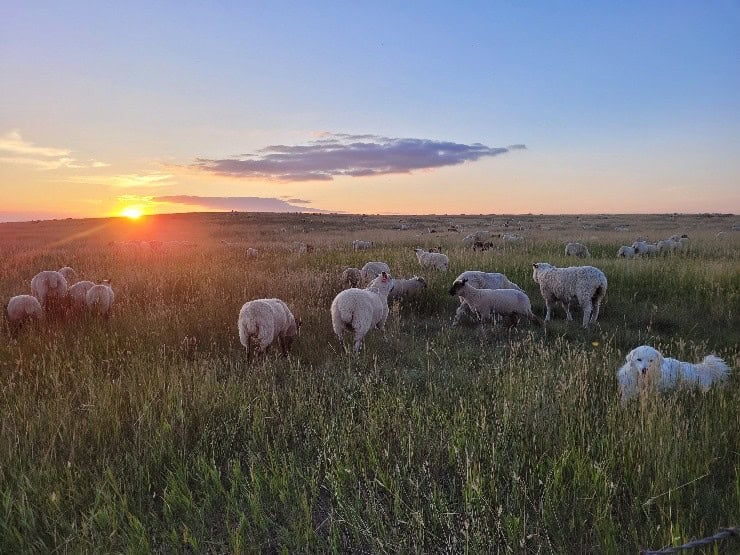
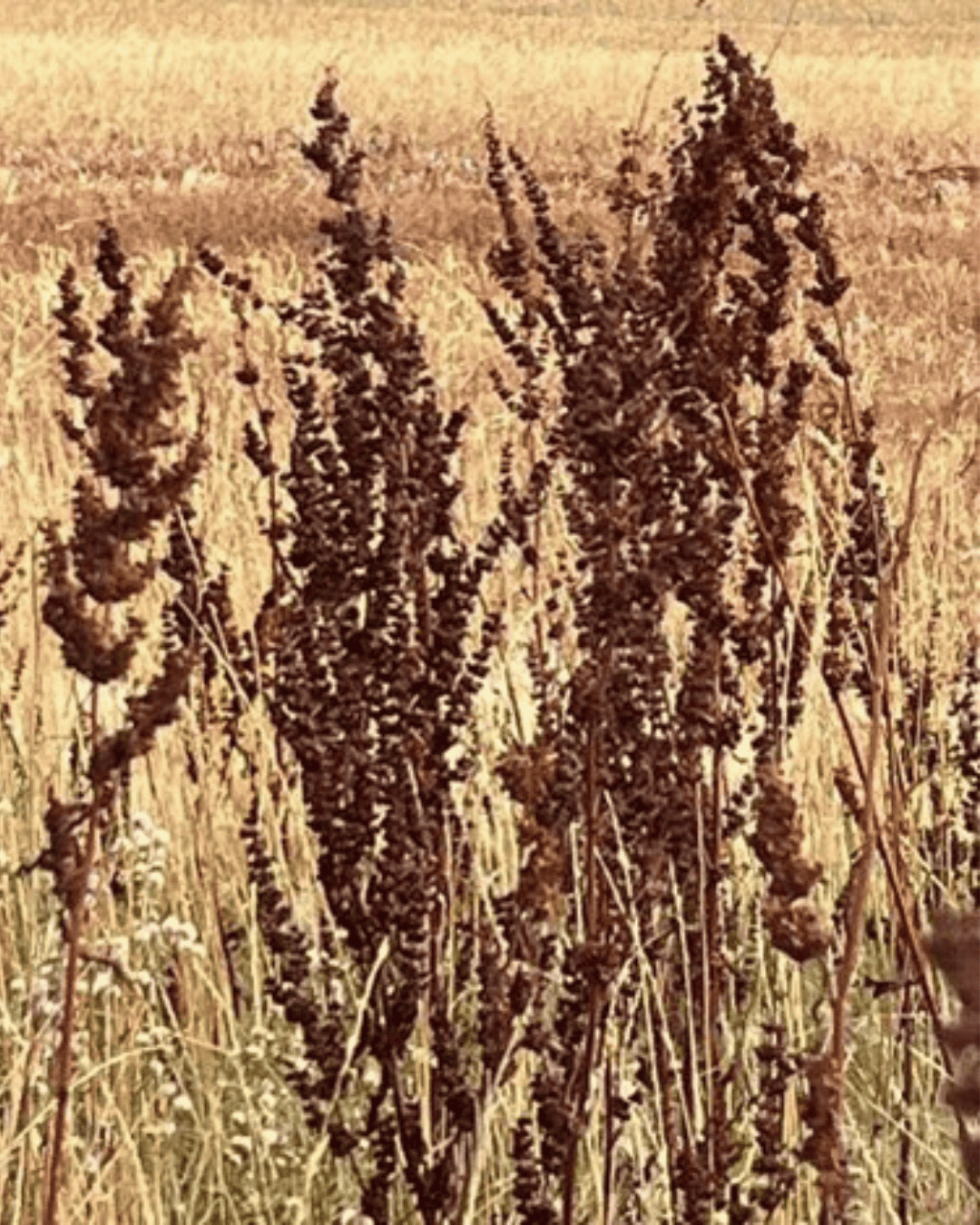
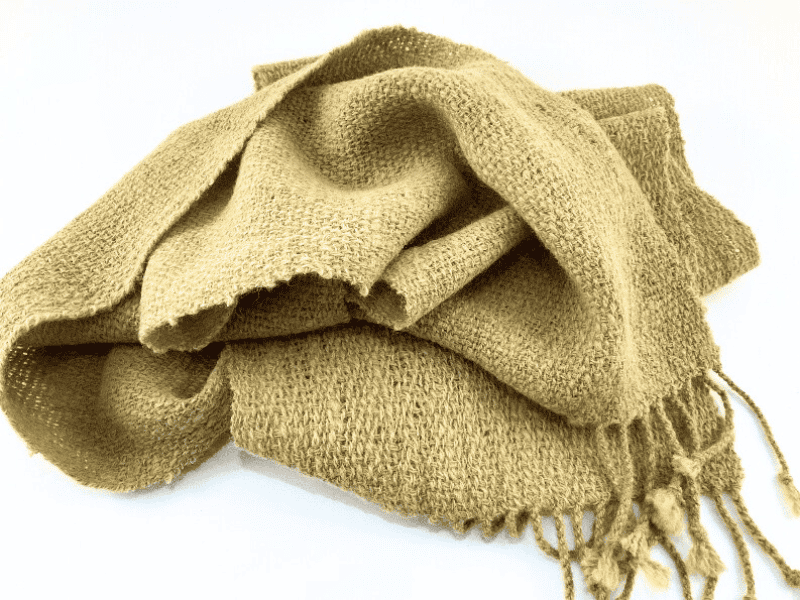
Arlette Seib’s flock of Corriedale sheep from Dog Tale Ranch provided the lovely fibre for this scarf. The fleece was processed at the Canadian Fibre Mill and was spun by Peggy Gwillim. Prior to weaving, I naturally dyed the fibre using Curly Dock, a native Saskatchewan weed you often see growing in ditches along our many country roads. I loved weaving the Corriedale wool with it’s inherent crimp giving the finished scarf an organic and unique quality.
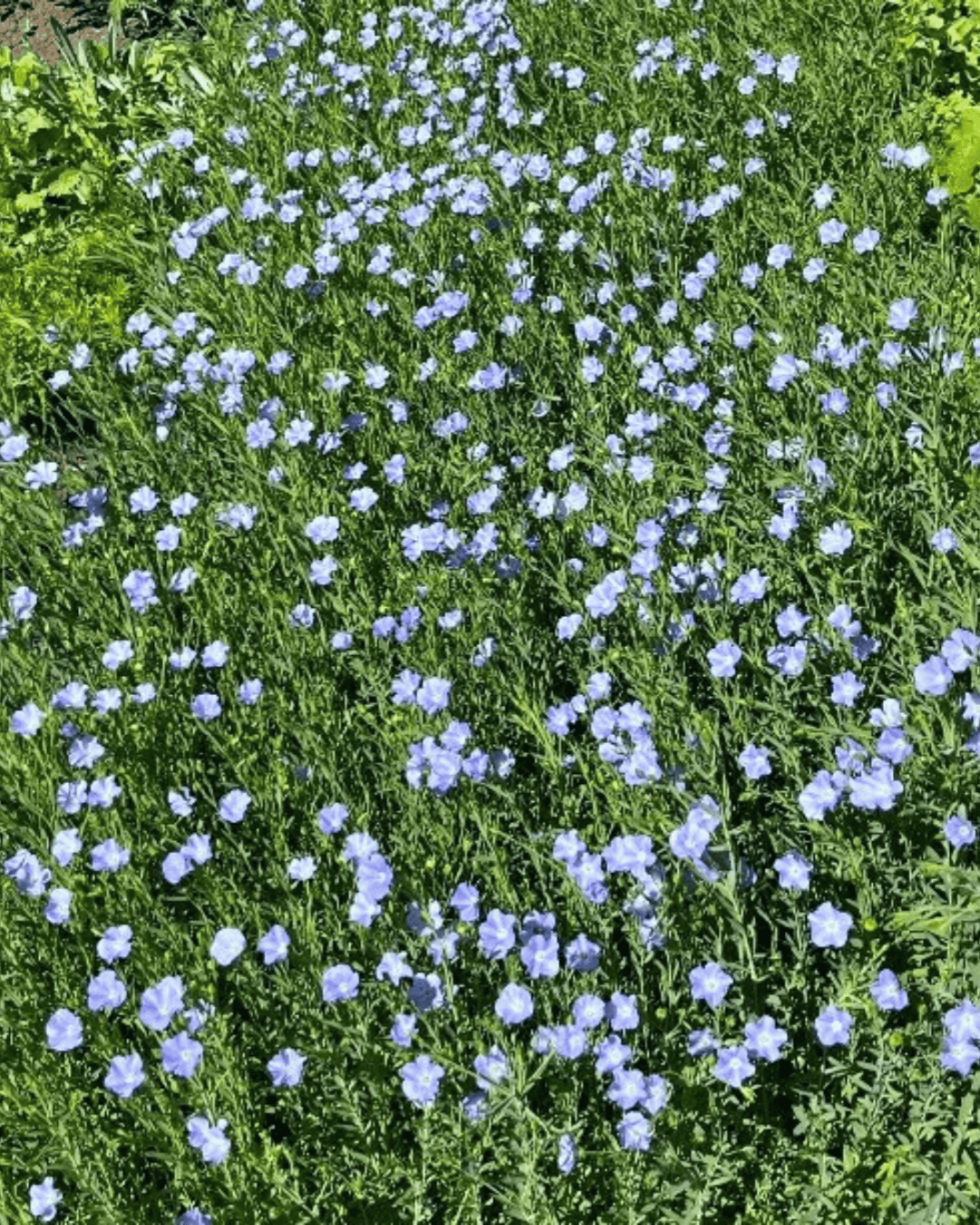
The (Flaxen) Linen Scarf
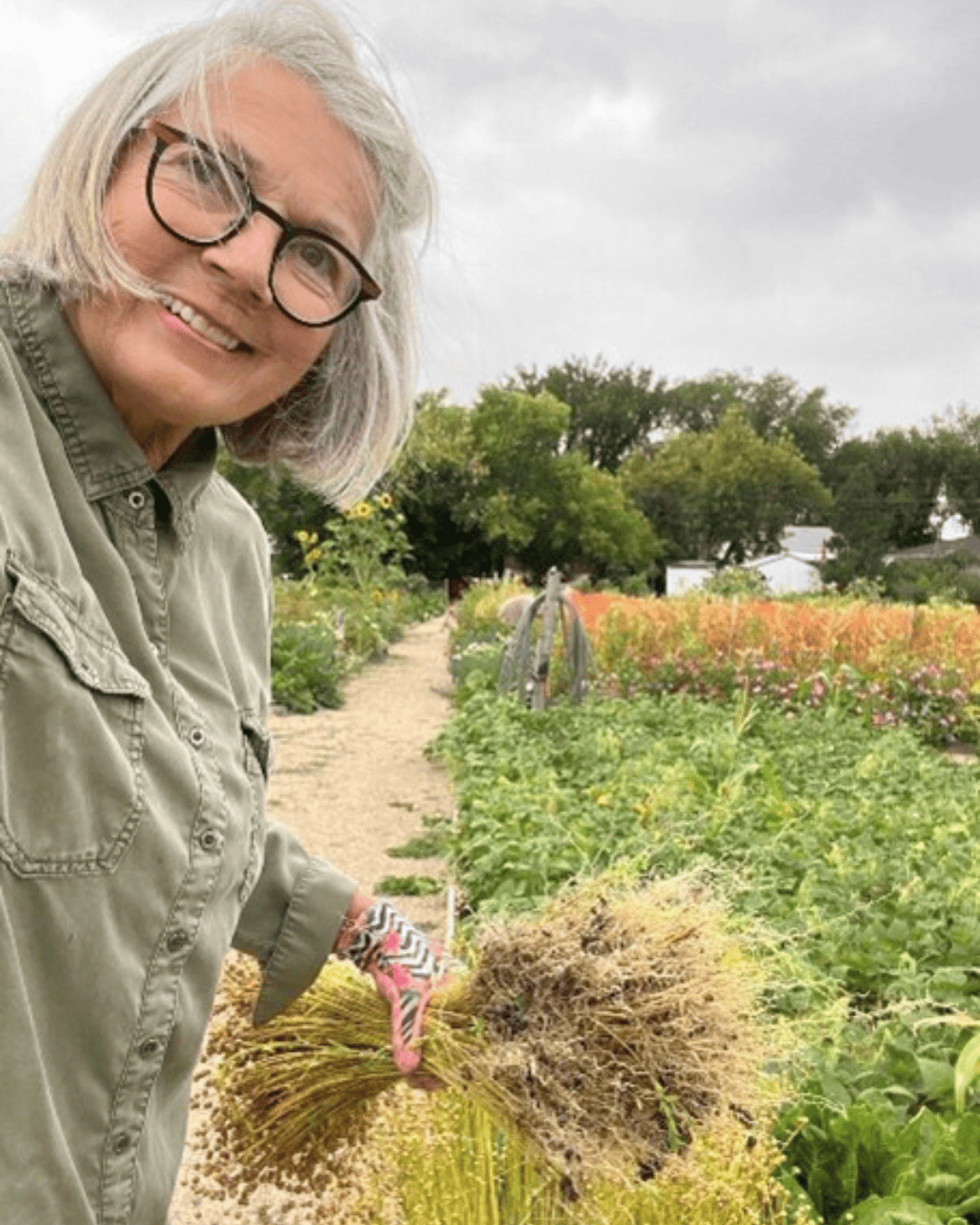
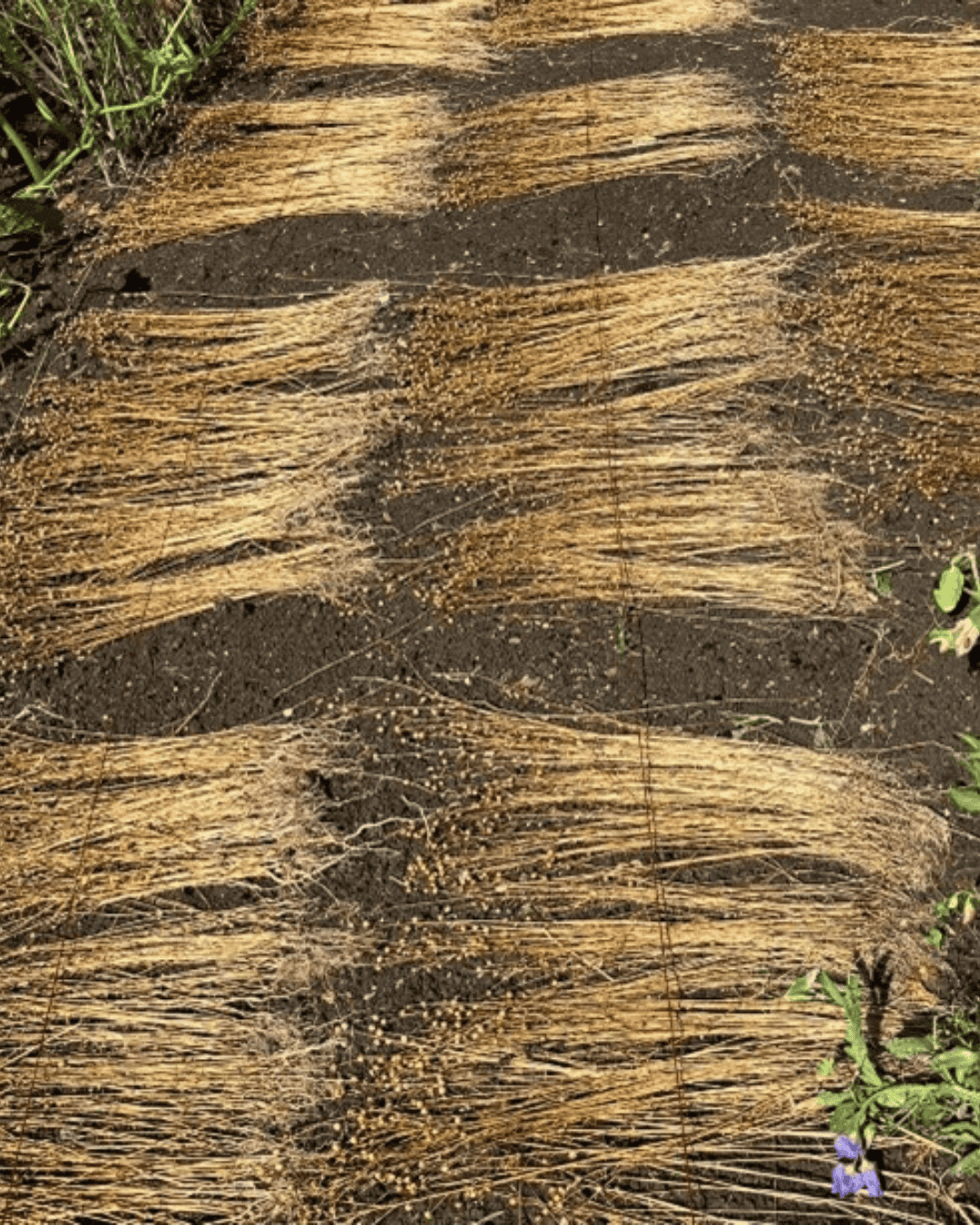
Two small flax crops were grown in my Regina community garden plot over the past two summers, which produced enough fibre for a single scarf. A course in flax growing, along with ongoing guidance, was provided by flax guru and crop scientist Alvin Ulrich of Saskatoon.
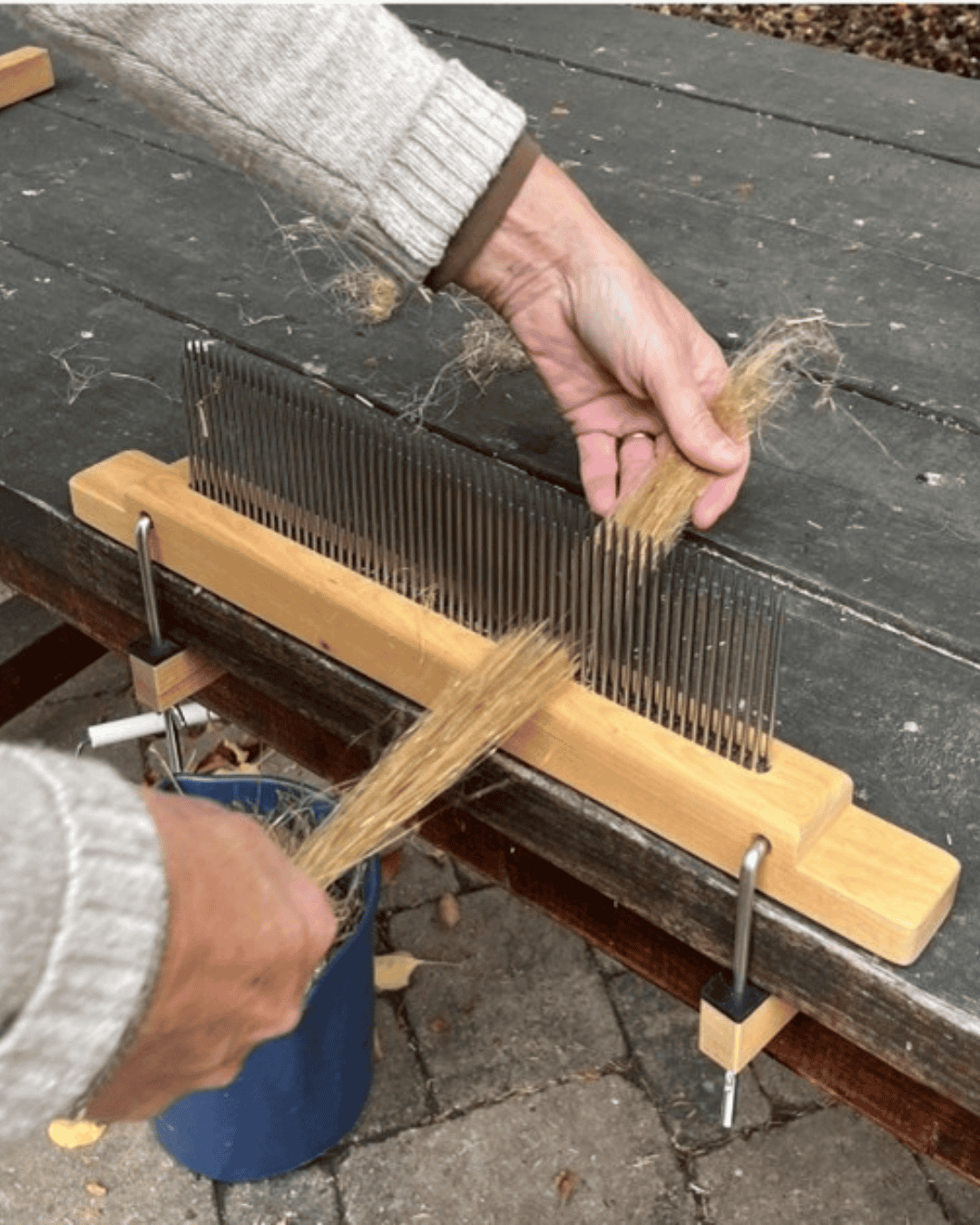
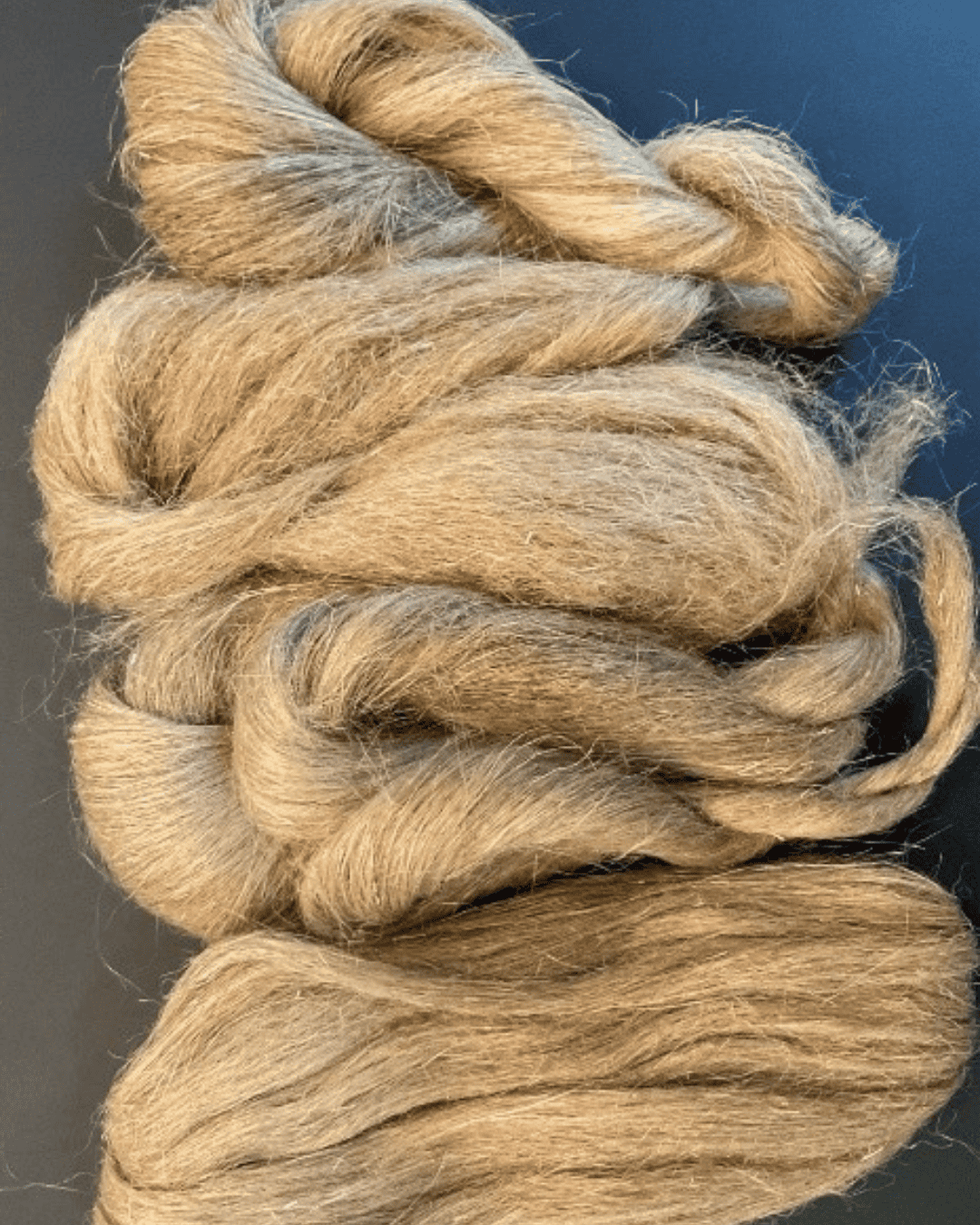
The flax was dried in situ, then water retted and processed in my backyard. First the straw is crushed in a flax break, built by woodworker Gord Blackmore. Then the outer shive is removed with a scutching knife. My tool is an antique from Estonia. The fibre is hackled; pulled through a bed of nails to further separate the individual fibres. Using this process, both long line fibre and shorter tow is produced. Dora Mushka used a wet spinning process and lots of patience to spin the resultant fibre into some wonderful linen yarn. A long process but worthy of the effort. Linen is a remarkable material with so many admirable qualities and applications. The final linen was woven into two scarves.
Acknowledgements
My sincere appreciation to all those who lent their knowledge, expertise and advice in this project:
- Sonja Welford (fibre)
- Canadian Fibre Mill (processing)
- Animal Husbandry Department, University of Saskatchewan (fibre)
- Sharon Ottenbreit (processing)
- Dora Mushka (spinning)
- Frances Folkeard (fibre)
- Peggy Gwillim (spinning)
- Brooke Aitken (fibre)
- Arlette Seib (fibre)
- Alvin Ulrich (flax specialist)
- Gord Blackmore (woodworking)
- Ramsey Rude (blacksmithing)